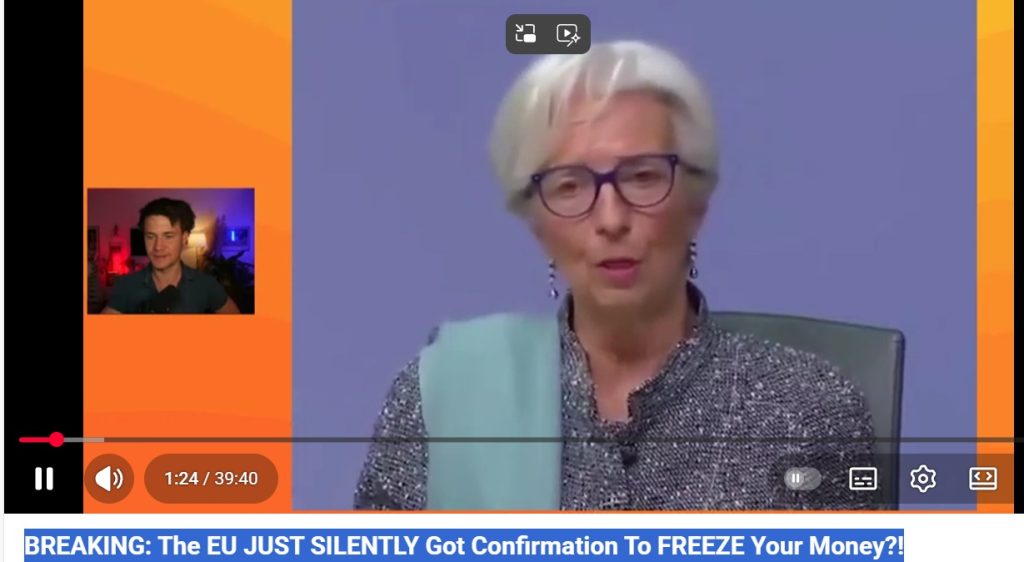
3 MINS AGO! Martin Armstrong Shared Terrifying Predictions You Can’t Ignore Anymore
Metal Sense
Metal Sense
16K abonnees
Lid worden
14 okt 2026 #gold #silver #martinarmstrong
3 MINS AGO! Martin Armstrong Shared Terrifying Predictions You Can’t Ignore Anymore
Global financial markets face severe geopolitical disruptions as reckless foreign policies accelerate international conflict. Western banks and sovereign bond markets face mounting structural distress that directly threatens decades of monetary stability.
Macro analyst and cycle forecaster Martin Armstrong contends that European leadership is intentionally provoking confrontation with Russia to conceal an acute domestic crisis.
Brussels is aggressively pushing for war because disastrous migration policies and civil unrest leave political elites desperate for an external adversary to prevent institutional collapse. Economic modeling predicts that the European continent is fundamentally doomed to economic disaster and will not survive its current trajectory between 2026 and 2028. Western plans to subjugate Russia will fail, given Moscow’s seventy-five trillion dollars in subterranean resources and firm military backing from China and North Korea. Ultimately, this engineered geopolitical confrontation will culminate in the total fragmentation of the European Union.

Severe structural deindustrialization is actively crippling the core of European manufacturing. German GDP growth has collapsed to an anemic 0.8 percent, while Italian economic expansion has fallen to just 0.5 percent after devastating energy disruptions. The physical sabotage of the Nord Stream pipeline abruptly severed vital fuel supplies, devastated heavy industry, and forced cornerstone automotive enterprises like Volkswagen to seek Chinese acquisition. At the same time, volatile foreign exchange rates distort real asset valuations, showing that physical gold performance depends on domestic currency denominations rather than standardized international metrics. Market participants purchasing bullion in Canadian dollars experience radically different balances compared to holders of Swiss francs, underscoring why genuine wealth preservation requires measuring profits locally. Deprived of cheap Russian resources and burdened by unpayable obligations, Western manufacturing hubs remain trapped in profound economic stagnation, leaving industrial powerhouses unable to stimulate growth through conventional monetary intervention.
We bring you the latest news, analysis, and insights across gold, silver, and copper markets. Our videos cover topics like gold price forecasts, silver predictions, copper outlooks, investment strategies, and long-term wealth preservation.
CREDIT: GoldSwitzerland by VON GREYERZ
Gold Sessions | Ep#3 Egon von Greyerz | Silver’s Clear Path to $200+
• Gold Sessions: Silver’s Clear Path to $200…
✔️ FINANCIAL DISCLAIMER
This channel shares educational insights and investment perspectives from experienced analysts. We DO NOT provide financial advice. Always consult a licensed financial advisor and conduct your own research before making any financial decisions.
We feature interviews and commentary from leading financial experts including Rick Rule, Peter Schiff, Mike Maloney, Lynette Zang, and other top voices in the world of precious metals and sound money. Stay informed, stay prepared, and make smart financial decisions with Metal Sense.
Subscribe now and never miss an update!

Hoofdstuk 1: Geopolitical instability & EU
I remember he asked me a question about gold and I said, “Okay, in Canadian dollars you should be doing this, so you should be buying.” And the Swiss guy
goes, “Yeah, but if I did, I would lose money.” I said, “You know, you’re right.
You buy it, but you sell.
You know, um Europe will not definitely is not going to survive. Uh this is um this is why Brussels is pushing for war.
They have the Hopson’s choice here.
Global financial markets face severe geopolitical disruptions as reckless foreign policies accelerate international conflict.
Western banks and sovereign bond markets face mounting structural distress that directly threatens decades of monetary stability.

Macroanalyst and cycle forecaster Martin Armstrong contends that European leadership is intentionally provoking confrontation with Russia to conceal an acute domestic crisis.
Brussels is aggressively pushing for war because disastrous migration policies and civil unrest leave political elites desperate for an external adversary to prevent institutional collapse.
Economic modeling predicts that the European continent is fundamentally doomed to economic disaster and will not survive its current trajectory between 2026 and 2028.
Western plans to subjugate Russia will fail given Moscow’s $75 trillion in subterranean resources and firm military backing from China and North Korea.
Ultimately, this engineered geopolitical confrontation will culminate in the total fragmentation of the European Union.
Now we present the clips from
Hoofdstuk 2: The conflict with Russia
Martin Armstrong’s interview. Before we continue to discuss this, please hit the like button, subscribe to the channel, and ring the bell icon.
Thank you and enjoy the video.
It’s beyond me, but they actually think they can walk in uh conquer Russia and
um you know, make it’s got Russia is the richest country in the world.
They have about 75, you know, trillion dollars in natural resources still in the ground.
So that’s why Hitler, Napoleon, everybody’s always tried to conquer Russia. Uh it’s not the other way around. They always say, “Oh, they’re going to invade this, so we get to do it first.”
You know, it’s all economically oriented. Uh and um but the numbers don’t show that, right?
Cuz I had somebody on my show that said that Putin’s like Stalin and I’m like, “Well, that he wants to go and take over everything.” But the data doesn’t show that it’s propaganda and they have been indoctrinated.
Honestly, uh Putin’s been there since 1999. If he wanted to do anything, he would have done a long time ago.
But besides that, there’s no economic benefit for Russia to take Europe.
They have nothing. They got to get their energy from Russia. All right?
You’re not talking about gold reserves. you know, you walk into France and they’re going to say, “You’re going to pay our pensions now.”
Uh, you’ll get nothing but civil unrest. It there is no benefit to going into Europe.
Um, and anybody that’s that is pushing that idea doesn’t have a freethinking brain and they don’t pick up the rug to look honestly.
Um, I was called in for another briefing and um, we were on this subject and I
I do think I guess they’re starting to listen to me.
Um, and I Who was in the briefing? Who was there? If you can I can’t say. Okay.
Uh um but I’ve warned them long time ago from the beginning and I’ve said;
NATO and political survival
Russia; if anybody really thinks they can walk in and take Russia you’re out of your
mind because besides you know nukes and pushing the button whatever I said there
is no way in hell that China and North Korea would ever allow Russia to fall because they know they would be next.
I
Was told that um Trump now understands this and that he was going to try and strongarm um Zalinski into a peace deal which I don’t believe he can but um the other interesting thing is when I said that China and North Korea are going to come to support Russia.
That’s why I believe Trump suddenly you saw Jin come to the United States and everybody was saying oh he was saying they’re horrible.
Why is all of a sudden is he kissing their ass? Because um I believe he’s trying to tell them we will not defend NATO against uh Russia.
The first time I was called in and you can pull down the peace plan that I was actually asked to write nu which I was surprised because my position was we should exit NATO.
I said they’re going to stab you in the back. So getting called in to the from the beginning I said you know what you know um and they actually said no you’re right.
So they know what I’m talking about. Um and when I said we should exit NATO they said yes we know you’re right.
Europe will not definitely is not going to survive.
Uh this is um this is why Brussels is pushing for war. They have the Hopson’s choice here.
Um the people are rising up and because of their mainly I would say the number one issue is their stupid migration policies.
All right. Um so instead of admitting a mistake and dealing with it, what do they do?
They need an external enemy and that’s Russia, Russia. Russia.
Oh, they’re going to invade Europe.
Oh, they’re going to do this. As long as you they try to distract you from that so you don’t pay attention to otherwise if they don’t come up with an external enemy Brussels is falling. All right.
You just had the AFD one. I can tell you cuz I’ve been speaking to some people in Brussels. They’re scared to death. Uh they’re seeing it in SP everywhere.
All right. Maloney came out in Italy and said we want some of our sovereignty back. So what does that mean?
Well, what is an attack on Brussels? Okay. So, Brussels knows.
So, therefore, it’s either Brussels is going to fail and Europe breaks up, the EU breaks up.
We need war with Russia so Russ so Brussels can survive.
Hoofdstuk 4: Economic decay in Europe
Severe structural de-industrialization is actively crippling the core of European manufacturing.
German GDP growth has collapsed to an anemic 0.8% 8% while Italian economic expansion has fallen to just 0.5% after devastating energy disruptions.

The physical sabotage of the Nordstream pipeline abruptly severed vital fuel supplies, devastated heavy industry, and forced cornerstone automotive enterprises like Volkswagen to seek Chinese acquisition. At the same time, volatile foreign exchange rates distort real asset valuations, showing that physical gold performance depends on domestic currency denominations rather than standardized international metrics.
Market participants purchasing bullion in Canadian dollars experience radically different balances compared to holders of Swiss Franks, underscoring why genuine wealth preservation requires measuring profits locally.
Deprived of cheap Russian resources and burdened by remain trapped in profound economic stagnation, leaving industrial powerhouses unable to stimulate growth through conventional monetary intervention.
Now, let’s get back to the interview. Well, our
Part 5: The 2028 political outlook for the US
computer is showing, and I’ve said for years, that the 2028 election looks absolutely devastating.
Well, I think you may see a complete civil unrest by that time. Um, mainly because
particularly if the the Democrats get both, then they can impeach Trump cuz the, you know, the House can always do that.
They’re going to take the House, fine. But the trial’s got to be in the Senate.
If they take the Senate, then they can impeach Trump.
What do you think? Um, look, the problem we have is this, and you see it in Europe, too, in Canada. All right.
Um, it’s if whatever Trump says, they must do the opposite.
Look, the back when NAFTA was being proposed, the Democrats were against it.
It’s going to cost American jobs. Now Trump wants to get out of it. Now they’re for it. That’s what I mean. It’s um there’s no rhyme or reason.
No, there there is. Nobody gives a about the country anymore. And uh it’s about uh I’ve just got to win and it doesn’t matter what.
Um and it’s not it’s everywhere. That’s what 2032 is about. Um we’re looking at the fall of Republicans and because I think this is going to illustrate to people that it does not matter. Vote the Democrats in.
Fine. Is that going to change the debt crisis? Anything? No. um you know it nobody’s interested in in changing the system that both sides are deeply entrenched into the money side by fall of republics what I mean is that we are never asked any questions all right shall we go to war with Russia or China or Iran answers nobody asked.
Hoofdstuk 6: Lessons from Roman history
That if you look at really at history the um I am doing a book for our conference
trying to finish it this week.
Um on Julia Caesar, why he really crossed the Rubicon, it’s exactly the same problems
we have today. Um the corruption was unbelievable.
Uh Cicero was the fake news of the ancient world. Uh they eventually cut off his hands and nailed him to the roster because he was so toxic.
Um but unfortunately Shakespeare and historians believed um Cicero and Ko is the one that started the whole mess.
Then you have the Ko Institute. Oh, he was for the republic. No, he was not. It was an oligarchy. All right.
Um and Caesar was the man of the people, a popularis.
When he crossed the Rubicon, he didn’t have to fight to get to Rome. Everybody cheered. Why? because he was they thought he was going to eliminate the debt crisis. Um, and debt was much more serious back then.
Let’s say you bought a house for 100,000. You borrowed the 100,000.
Market crashes. All right. You couldn’t just walk away. No, you still owe 100,000. Take your family, sell you into slavery.
I mean, um, it was it was pretty brutal. So there was no, it was everything was basically for the creditor, not for the borrower.
Um, so I mean today you borrow for a house, the house crashes and you walk away from it and the bank takes the house, you’re done. Okay?
But that wasn’t the way it was. They didn’t want the house back. They want the 100,000 that you borrowed. That’s it. Pay up.
Um, so it was a much more serious issue.
So when Caesar crossed the Rubicon, they cheered. We’re definitely going into a um a steep economic decline, but this is global going uh from 26 into 28.
Uh if you look at the GDP growth of of Germany, it’s 0.8%.
Mhm.
You know, France, you know, it all these riots, they came afforded schools. Um Italy down to 0.5%.
They have Brussels has absolutely destroyed the European economy. And then you have the mad man Zelensky.
They have charged in Germany, a Ukrainian who blew up the pipeline, you know, and he attacks all these uh the refineries.
He
Hoofdstuk 7: The origin of conferences doesn’t care about the world.
And he’s actually came out and said um he doesn’t care about diesel. He says my country comes first. He’s blown up the Nordstream pipeline, destroyed the German economy. Volkswagen sold to China.
Um, and then has the audacity to walk in and say, “Give me money, otherwise he’s coming after you.”
I mean, it’s talk about stupidity. I mean, um, it’s crazy. Okay, go ahead.
My concern about Marz is that he’s like Cheney selling out his own country for what a pocket of money you cannot spend.

Meet people from around the world. And actually how they started I used to do just a I would fly to Vancouver do one there for like 20 30 institutions go to Toronto, Frankfurt etc.
And I was doing one in Zurich and a client from Canada came and I said why did you come here? I said I do them there and he said and he said I want to see what you’re saying here and it was actually quite interesting because of the currencies were move you know 20% differences and stuff back then.
So I remember he asked me a question about gold and I said okay in Canadian dollars you should be doing this so you should be buying. And the Swiss guy goes, “Yeah, but if I did it, I would lose money.” I said, ‘You know, you’re right.
You buy it, but you sell, you know, um because everybody’s got to measure their profits in their own currency. Yep.
And and then everybody said, you know, this is really interesting. You should have you we you should have a big one and we all come together.
And I said, that’s an idea. So that the first World Economic Conference was 1985. It was I have the videos from it. It’s interesting. We got, you know, guys from the Middle East in the white robes and we got um the hesitic Jews from New York City and the black, you know, that ran the garment industry.
Um and everybody’s like, [clears throat] it was like, how do you do this? I said, very simple.
Wednesday, I say tell the Jews to sell and the Arabs to buy and I reverse it the next day. But um everybody got along. It was, you know, it was a very interesting conference. Um, we’ll probably we’ve been talking about maybe putting the u the whole video out.
Hoofdstuk 8: Systemic democratic failure
Historical precedents show that sovereign debt saturation systematically dismantles republican governance, closely mirroring the Roman Republic’s terminal breakdown when Julius Caesar crossed the Rubicon.
Roman citizens cheered his march because unpayable debts had subjected the populace to an oppressive creditor regime.
In antiquity, borrowing was ruthless.
Financial insolvency didn’t allow bankruptcy, but instead auctioned families into slavery to satisfy elite creditors.
Figures like Kato and Cicero maintained an entrenched oligarchy disguised as a constitutional republic, weaponizing political rhetoric to protect established wealth.
Today, Western representative democracies mirror this exact systemic decay.
Factional politicians no longer govern to preserve the nation.
They prioritize partisan dominance while compounding national debt.
Major policies like international trade pacts are routinely reversed solely out of spite rather than sound economic strategy.
Citizens are completely excluded from monumental decisions, never voting on proxy engagements, inflationary debt financing, or confrontations with major
geopolitical powers. Because establishment parties remain deeply bound to elite financial interests.
Institutional gridlock paralyzes governance, echoing the systemic decline that historically destroyed Rome’s Senate. Share your thoughts about this interview in the comment section below.
If you found this video helpful, please hit the like button, subscribe to the channel, and ring the bell icon. Thanks for watching.

The ECB thinks/believe that you and I are stupid?
Christine Lagard posted it herself in July. She said, “They carry
my signature, but these are your banknotes.”
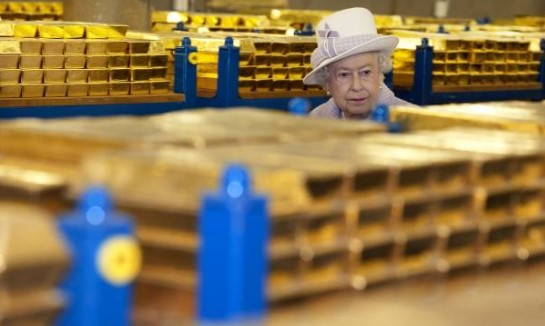


The ECB thinks/believe that you and I are stupid?
January 1999, the euro is born as an accounting currency.
At first, the broad money supply. what economists call M3 is about €4.46 trillion. Okay.
July 2026, the ECB’s own monetary release shows that the M3 money supply is 17.61
trillion. That’s 3.95 times more euro units, nearly four times, a 295% increase.
About 5.1% growth compounding every single year for 27 years.
and the narrow stuff, M1, the money closest to cash, from 1.8 trillion to 11.3
trillion, six and a quarter times.
Now, I want to be intellectually honest here because this is where people get lazy.
Some of that growth is legit, right? The economy got bigger, more countries
joined, more people, more stuff. So, let’s account for it.
Euro area real GDP, the actual bread and houses and services grew about 41% over the same period.
So, here’s the math, and it’s the only math you need. The money supply times 3.95, real economy times 1.41.
Divide that, and you get 2.8.
There are 2.8 times more euros chasing every unit of real stuff in the economy than there were in 1999.

Now, flip it around. 1 euro from 1999 represents about 36 cents of purchasing power today measured by the ECB’s own money creation against the real economy.

That’s about 3.8% debasement per year compounding for a generation.
Christine Lagard posted it herself in July. She said, “They carry
my signature, but these are your banknotes.”
And then this week, the official ECB account said, “Protecting cash also means preparing it for the future.
We are working on new euro? banknotes that will be more secure, sustainable, and resilient, and giving Europeans a say on the designs.
Protecting cash, your bank notes. your turn.
A say together inclusive, democratic Europe designing its own money.
Congratulations, you’ve been sced.
And I want to be clear. I’m not saying that to be edgy. I’m saying it
because in the second week of September in 2026, the ECB published everything
you need to see the trick in its own words on its own website.
And once you put those words next to the numbers, and I mean the ECB’s own numbers, you cannot unsee it.
So here’s what we’re doing in this video. This episode is a mirror. On one side, what the European Central Bank says about your money and on the other side, what it actually does to your money.
Now when I first read the speech there were multiple occasions where I thought I misread something a few paragraphs after the euro belongs to all Europeans.
So should its future.
Cipelona says this and again I’m quoting under article 128 of the treaty of the functioning of the European Union.
The ECB has the exclusive competence to authorize the issuance of euro banknotes. This is the same speech, same man, same afternoon.
He says the euro belongs to all of you and only we are allowed to make it.
Okay. So who is we?

The governing council. six executive board members who always vote and 21
national central bank governors who share 15 rotating votes. So 21 votes
decide how much money exists for 358 million people.
Cypalone celebrates that the new legal tender regulation will strengthen the concept of legal tender and that the mandatory acceptance of cash will be reinforced ensuring trust in the currency.

So put these two things together. A currency you are legally required to accept produced in whatever quantity a committee of 21 decides. You didn’t vote for that and you can’t audit that.
And you know who wrote a book about all of this?
F ah hayek in 1976 called the denationalization of money and his argument is so simple that it hurts.
He said if money is a state monopoly the state will always be tempted to make more of it.

The only protection is competition. Ludwig from Misa said sound money is basically a civil liberty and the ECB setup is almost word for word the exact thing
Hayek was warning about.
Forced acceptance plus third party control.
That’s not a free market in money. You are not a participant. You are a captive
customer that can use a fake suggestion box from time to time.
The ECB Thinks You’re Stupid (Here’s The TRUTH)
Bram Kanstein
Bram Kanstein
31,2K abonnees
5 okt 2026 Bitcoin for Millennials
The ECB’s euro banknote vote is a PR trick, the real issue is euro money supply dilution
View more Bitcoin for Millennials episodes here: I Was a BIG Bitcoin Hater: Here’s Why I We…
Bram Kanstein is a creative entrepreneur and the host of Bitcoin for Millennials, exploring Bitcoin not as a trade, but as essential savings technology and a rational opt-out from a failing fiat money system.
› / bramk
PARTNERS
The Bitcoin Way is your personal Bitcoin security team. Schedule a free, 30-minute introduction call: http://www.thebitcoinway.com/bram?utm…
Stack Bitcoin faster with Invity Turbo Buy: https://invity.onelink.me/yIY4/BRAM — use code BRAM to get €50 after 10 completed transactions
PRODUCTS I ENDORSE
› Get 10% off a Bitaxe open-source Bitcoin home miner using code BRAM at https://shop.powermining.io/?ref=BRAM
› Heat your home and Earn Bitcoin with Heatbit – Get 5% off with code BRAM at https://heatbit.com/?ref=BRAM
› Stamp Seed: The safest way to backup your hardware wallet – Get 15% off with code BRAM at https://stampseed.com
SUBSCRIBE TO GET NOTIFIED
/ @bramk
Podcasting app links: https://bitcoinformillennials.com
Follow me: / bramk
My newsletter: https://bramk.substack.com
Nostr: npub1gfxgylgst4lcemkjth6xdvcvq7le8rtlrym7wayml63qrjggngaqkqescl
ABOUT BITCOIN FOR MILLENNIALS PODCAST
Join Bram Kanstein and his guests on a journey to learn how our current financial system works, why it is flawed, and why Bitcoin is the most relevant technological discovery you should understand and adopt.
Bitcoin #Finance #Economics #Fiat #BTC not #Crypto #BitcoinETF #ETF #Scarcity #bitcointalk #bitcoinnews #bitcoins #bitcoinprice #moneymindset #moneytips #money #millennialmoney #millennials #ecb #europeancentralbank
EPISODE SUMMARY
Bram Kanstein discusses how the ECB’s euro banknote redesign turns democracy into theater. He names the PR Vote, then asks the Quantity Question nobody gets to touch. Using ECB numbers, he shows M3 up 3.95x since 1999, GDP up 1.41x, leaving a euro worth about 36 cents. He confronts “price stability,” negative rates, and a digital euro with less privacy and holding limits. He ends with Bitcoin as radical transparency and fixed supply.
You are invited loudly with 9 million participants and the president’s actual signature to vote on the picture of a bank note while at the same time you will never ever be invited to vote on the quantity of the banknotes or the quantity of euros or what a euro even is.
on Monday the 21st of September.
It will be the close of the survey that we have launched about three months ago
now for Europeans including Irish people please to express their views about the
future bank notes that we will have throughout Europe.
This is Monday end of the survey. You still have a chance to actually express views as to which series of banknotes you are looking forward to.
Don’t you also think it’s absolutely amazing that you get to vote on the design of the new Euro bank notes?
There are 10 designs, a jury of 21 experts, over a thousand designers applied, and there’s two big teams, European culture, and rivers and birds.
So, you get to choose between like Beethoven and Marie Curi or a stork and a kingfisher.
And the ECB says, “Everyone in Europe is invited to have their say.”
Christine Lagard posted it herself in July. She said, “They carry my signature, but these are your banknotes. Now it’s your turn to help shape what they’ll look like in the future.”
And then this week, the official ECB account said, “Protecting cash also means preparing it for the future.
We are working on new euro banknotes that will be more secure, sustainable, and resilient, and giving Europeans a say on the designs.
Protecting cash, your bank notes. your turn. A say together inclusive, democratic Europe designing its own money.
Congratulations, you’ve been sced.
And I want to be clear. I’m not saying that to be edgy. I’m saying it because in the second week of September in 2026, the ECB published everything you need to see the trick in its own words on its own website.
And once you put those words next to the numbers, and I mean the ECB’s own numbers, you cannot unsee it.

So here’s what we’re doing in this video. This episode is a mirror. On one side, what the European Central Bank says about your money and on the other side, what it actually does to your money and then reflected back at the end, the one monetary system on earth that doesn’t need a marketing department to be trusted.
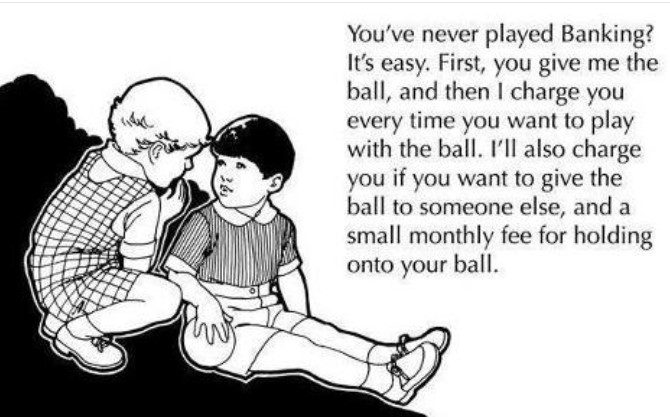
I’m going to give you a number in about 10 minutes that’s going to change how you look at every euro in your wallet.
So, hold on for that. But first, we need to go somewhere unexpected.
We need to go to a speech in Brussels.
I’m Brah Constein. This is Bitcoin for Millennials. And if you’re enjoying my content, it would mean a lot to me if you could subscribe to the channel and like my video to support my journey. Thanks a lot.
Now, let’s dive in. Here’s what most people get wrong about the bank note thing. They think it’s harmless, maybe even cute. Oh, they’re letting us pick the pictures.
That’s so nice and look on its own, you know, maybe. But it’s not on its own.
It’s part of a system. And the system only makes sense once you see the whole
thing.
So on September 14 this year, Pierro Cipalone, he’s on the ECB executive board, gives a speech at the House of the Euro in Brussels.
The title is the future of Euro cash, trusted today, designed for tomorrow. 25 years of Euro cash.
And it’s a lovely speech, you know. He says, “Cash is a tangible anchor of stability and trust. Cash protects privacy. Cash, and I love this one, safeguards freedom of choice.
Cash is an expression of our European common European identity. And then the big
number he said more than 9 million people have already taken part in the selection of the designs which makes it one of the most successful European public surveys ever conducted.
And his conclusion, listen to this. He says this tells us something important.
Euro bank notes unite us. 9 million people out of 358 million people voting on money.
That sounds like participation, right? Okay.
Now, let’s go to the ECB’s own FAQ on the redesign of the banknotes.
We can go to question 20 which says who will decide on the final design.
And the answer is the final decision will be made by the governing council taking
into account the views of the European public and the advice of expert groups.
taking into account its advisory.
And then question 16, the survey results get published after the governing council
decides around the end of this year.
So you vote, they decide, and then they show you what you voted for.
That sounds like a focus group with a press release.
I want to give this a name because we’re going to keep coming back to it.
I’m calling it the PR vote. You are invited loudly with 9 million participants and
the president’s actual signature to vote on the picture of a bank note while at
the same time you will never ever be invited to vote on the quantity of the
banknotes or the quantity of euros or what a euro even is.
Now hold that phrase the PR vote as we’ll come back to it.
Now when I first read the speech there were multiple occasions where I thought I misread something a few paragraphs after the euro belongs to all Europeans.
So should its future.
Cipelona says this and again I’m quoting under article 128 of the treaty of the
functioning of the European Union. The ECB has the exclusive competence to
authorize the issuance of euro banknotes. This is the same speech, same
man, same afternoon.
He says the euro belongs to all of you and only we are allowed to make it. Okay.
So who is we? The governing council. six executive board members who always vote and 21 national central bank governors who share 15 rotating votes. So 21 votes
decide how much money exists for 358 million people.

And none of these votes are yours. There is no survey for that.
There has never been a survey for that. And there will never be one. But it gets
better or worse depending on how you look at it because the euro isn’t optional.
Cypalone celebrates that the new legal tender regulation will strengthen the concept of legal tender and that the mandatory acceptance of cash will be reinforced ensuring trust in the currency.
So put these two things together. A currency you are legally required to accept produced in whatever quantity a committee of 21 decides.
You didn’t vote for that and you can’t audit that.

And you know who wrote a book about all of this? F ah hayek in 1976 called the denationalization of money and his argument is so simple that it hurts.
He said if money is a state monopoly the state will always be tempted to make more of it.
The only protection is competition. Ludwig from Misa said sound money is basically a civil liberty and the ECB setup is almost word for word the exact thing Hayek was warning about. Forced acceptance plus third party control.
That’s not a free market in money. You are not a participant. You are a captive
customer that can use a fake suggestion box from time to time. Okay.
So, let’s ask the question the survey doesn’t ask.
This is the number I promised you. Nobody is talking about this and it’s the only thing that matters. How much euro money units are there?
And what happened to the one in your pocket?
In January 1999, the euro is born as an accounting currency.

At first, the broad money supply. what economists call M3 is about €4.46 trillion. Okay. July 2026, the ECB’s own monetary release shows that the M3 money supply is 17.61 trillion. That’s 3.95 times more euro units, nearly four times, a 295%
increase, about 5.1% growth compounding every single year for 27 years.
and the narrow stuff, M1, the money closest to cash, from 1.8 trillion to 11.3
trillion, six and a quarter times.
Now, I want to be intellectually honest here because this is where people get lazy.
Some of that growth is legit, right? The economy got bigger, more countries
joined, more people, more stuff.
So, let’s account for it. Euro area real GDP, the actual bread and houses and
services grew about 41% over the same period. So, here’s the math, and it’s
the only math you need.
The money supply times 3.95, real economy times 1.41. Divide that, and you get 2.8.
There are 2.8 times more euros chasing every unit of real stuff in the economy than there were in 1999.
Now, flip it around. 1 euro from 1999 represents about 36 cents of purchasing power today measured by the ECB’s own money creation against the real economy. That’s about 3.8% debasement per year compounding for a generation.
And I keep on coming back to that number of 36 cents. Now you know I
know what the push back is.
People can say the official inflation number is only 2.2% a year. That is true. By the ECB’s consumer price index, the HICP, cumulative inflation since 1999, is
around 80%. So by that measure, a 1999 euro buys about 56 cents of stuff today.
So which is it, 56 or 36? It is actually both. And the gap between them, that 20
cents is the most important thing in this entire video.
Because let’s get back to the ECB post from the top of this video.
They said protecting cash also means preparing it for the future.
Notice what is being protected.
They are
talking about the paper, the security features, the sustainable cotton, the
resilient ink, but not the value that it represents.
You can make the 50 bank note indestructible and it still buys what a 20 bought when it was printed.
They’re guarding the rapper while the value it should represent evaporates.
Now, hold that gap because I’m going to explain exactly where it went.
But first, I need to show you what the ECB calls success.
Bitcoin in self- custody is the revolution. But, as we’ve recently seen
with the cold card exploit, you could have done everything right and still
fall victim to faulty software.
When I realized I never had the proper setup, even though I thought I had, I knew I
needed help. And that’s how I found the Bitcoin way. Their security experts
taught me how to self-custody my Bitcoin the right way with airgapped wallets,
backups, running a node, the full architecture.
None of their customers were affected by the cold card exploit because they had the proper setup.
Bitcoin is way less stressful when it’s not a solo mission.
That’s why I partner with the Bitcoin way, aiming to help 1,000 people get a 100% self-custody setup so they can enjoy the same sovereignty as I do.
You can book a free intro call today with the Bitcoin way team at the bitcoinway.com/bram.
You’ll end up with a bulletproof setup, more skills, and a lot more confidence.
That’s the bitcoinway.com/bra. If you’re bullish on Bitcoin long-term,
you probably have the same problem I do.
You always feel like you don’t own enough. Infity’s Turbo Buy is built exactly for that.
Every time you make a recurring Bitcoin purchase, Infinity adds 60% extra buying power. So, if you buy a €100 worth of Bitcoin, Turbo Buy gives you €160 of buying power at today’s price.
Infity charges a 9.9% annual fee on that extra buying power.
So, the basic idea is simple. If you believe Bitcoin’s long-term growth will
outperform that fee, Turbo lets you accelerate your accumulation today.
And the best thing is you can close and settle the strategy anytime. Download
Infinity through the link in description.
Use code brum at sign up and earn €50 after 10 completed recurring buys.
Now have fun turbo buying those sets.
Here’s what’s broken about the word stability.
Go to the ECB’s explainer page.
It’s literally called why are stable prices important? And it says inflation of 2% provides a safety margin against the potential risks of deflation. The strategy page says the goal is to preserve the purchasing power of the euro and that stable prices allow money to keep its value.
Okay, now do the math on 2% just 2%. Over 20 years it removes a third of your money’s value.
Over 30 years almost half. Over 40 years a working life about 55%.
So the ECB’s stated target, the thing it calls price stability, is that the money you save at 25 has lost more than half of its value by the time you retire.
That is their target. And that is not a failure. That is their entire plan.
And the actual monetary growth, remember, ran closer to 3.8%, not 2%.
And then there’s what they did to savers directly.
From June 2014 to mid 2022, eight years, the ECB held its deposit rate below zero. It bottomed out at minus half a percent. Big Dutch and German banks were paying 0.02% on savings with inflation positive the entire time.
So every euro in a savings account was guaranteed to lose value.
Alon trade did the math. Euro area households net interest income was minus
111 billion euros in 2022 alone.
Meanwhile, the Euro system balance sheet, that’s the ECB’s own pile of assets it bought with money it created, went from about 700 billion in 1999 to a
peak of about 8.8 trillion in 2022.
And here’s the part that makes me laugh out loud.
On September 15th of this year, the day after the cash speech, the ECB blog published a post noting that around 80% of Euro area households don’t own any stocks or market-based financial instruments, just savings, just euros.
So, think about that combination.
There’s 80% of households that hold their savings in the unit being debased at 3.8% a year.

And the institution doing the debasement writes a blog post wondering why Europeans don’t invest more. You make more money than your parents did and somehow own less.
Where you did everything right, you saved, worked, and you’re still not getting
ahead. That is not a mystery. That’s a 3.95x money supply meeting a 1.41x economy.
That’s the gap. That is the 20 cents we talked about. So why do this?
Why spend millions on design contests and surveys and have your say campaigns?
The ECB is not stupid. These are, I’m assuming, intelligent people.
So, the campaign has to be doing something. Let me put it this way. There’s a question that once you ask it, you cannot put back in the box.
And the question is, what is money? Not which picture should be on the 50 bill, but what is it?
Where does it come from? Who makes it? How much exists? Why does that number keep
going up? And why does my life get more expensive while my salary doesn’t
increase at the same rate?
I’m going to give this a name because it’s the second half of the PR vote.

I’m calling it the quantity question. And here’s the thing about this question.
As long as you don’t ask it, all of that stuff stays a vague feeling. Something about the economy, something about greedy landlords or billionaires, something
about Brussels and politicians, anything except the actual mechanism.
And the system gets paid for that. Every year you don’t ask, the people who make the money get to keep making it.
spend it first and hand you a survey about birds and composers instead.
That is something like a dividend for being ignorant. It’s the return the system earns on your not knowing.
So now look at the PR vote again. It’s not a distraction from the quantity question by accident. The PR vote is the answer to the quantity question.
It’s what you get to keep you busy and distracted.

Watch the vocabulary that they use. your banknotes, your money. Cipalone and
Commissioner Donovskis said in December 2025, “It’s our money issued by a public
institution.”
Caloney in June 2024 in a blog post about a central bank digital currency of all things.
Freedom lies at the heart of the European Union’s principles.
Freedom, yours, ours, together, every single possessive pronoun is doing work.
It’s building a feeling of ownership over something you demonstrably do not own, cannot audit, and are legally forced to accept.

And when people push back, the ECB’s word for that is myth. The ECB blog literally ran a post called Digital Euro debunking banks fears about losing deposits.
The ECB podcast promises to debunk some of these myths.
The FAQ says the digital euro would never be programmable money.
Never.
That’s a very absolute word. They say never about software, something that can be changed instantly and easily in a centralized manner. But anyway, that is the pattern.
Step one, you tell people they participate.
Step two, tell people they are free.
Step three, label anyone who asks the quantity question as confused or misinformed or a conspiracy theorist.

And then you close the loop.
And the ignorance dividend pays out every year that it holds.
Now, I said I’d show you where the mask slips.
This is it. Put the digital euro in the mirror. Lagard at the BIS in 2023 said,
“The digital euro, and I quote, cannot be programmable.
It can be associated with conditions which is different but not programmable.”
In the same session, she said, “Is it going to be as private as cash?”
No. And then the prank call.
In the same year, someone pretending to be Zelinski gets Lagarde on the phone
and she says the digital euro would have a limited amount of control.
There will be control. You’re right. You’re completely right.
We are considering whether for very small amounts, you know, anything that
is around 300400 we could have a mechanism where there is zero control.
But that could be dangerous.
Zero control over your own money is dangerous for the ECB.
So where is this now? The European Parliament adopted its negotiation position in July 2026 with a pilot planned for mid 2027 and issuance around 2028 or 2029.
And there’s a holding limit on the table somewhere around €3,000 because if you
could hold too much of the central bank’s own money, it would hurt the
commercial banks.
Yes, your central bank wants to cap how much of its own money you are allowed to keep.
So, the same institution that spends September 2026 telling you cash safeguards freedom of choice is building a version of the euro with conditionalities, less privacy than cash, and a ceiling on how much you can hold.
And in a March 2026 blog post, it calls this a strategic investment in
European autonomy, monetary sovereignty, and financial resilience.
Whose autonomy or whose sovereignty? Definitely not yours.
Sovereignty in ECB speak means the ECB’s control over the payment rails.
Your sovereignty was never the product.
Your feeling of sovereignty was and that is the entire euro sciop in one sentence.
Okay. Now let’s flip this entire thing. Imagine a form of money where the quantity question has one answer forever and anyone can check it.
Where the issuance schedule was published before the first unit existed.
where there is no governing council, no article 128, no legal tender mandate, no
have your say because the rules were written once in open source code and
every participant can read them and verify them every 10 minutes on a public
global neutral ledger that anyone can use.
That’s Bitcoin 21 million coins forever. And here’s a fun one. On March
9, 2026 at block 9939,999, the 20 million Bitcoin was mined. About
95% of all Bitcoin that will ever exist already exists. Issuance today is about
450 coins today and it halves again around April 2028.
Nobody voted for that. Nobody needs to. It’s not your Bitcoin because Frankfurt says so in a tweet.
It’s your Bitcoin because you
hold the private keys and the supply is absolutely finite.
This is what I mean when I say radical transparency.
And I want to be precise because people throw that phrase around, but it’s not a
slogan. It’s a property of the Bitcoin system.
The ECB has to tell you the euro belongs to you over and over and over again in blog posts and surveys and podcasts and speeches because it actually in reality doesn’t.
Bitcoin never has to tell you anything. You can just look and verify it for yourself.
Notice how the ECB treats this alternative.
In November 2022, with Bitcoin around $17,000, two ECB economists publish Bitcoin’s last stand on the ECB block blog.
In February 2024, they called the Bitcoin ETF approvals in the US the naked emperor’s new clothes.
These ETFs became the most successfully launched ETFs ever, by the way.
Then in October 2024, with the Bitcoin price around 67,300, a paper arguing that if Bitcoin keeps on going up, and I’m quoting, “The existence of Bitcoin impoverishes both non-holders and latecomers, and that non-holders have compelling reasons to
oppose Bitcoin and advocate for legislation against it.”
Now, let that sit for a second. Not owning Bitcoin will make you poor is what the ECB said.
I told you. I assume that these people are intelligent, right? The institution that grew the euro supply 3.95 times, diluting every non-asset holder in Europe is warning you that a fixed supply money will impoverish you.
At time of recording this video, the price of Bitcoin is around $84,000.
I rest my case. So, what do you do with this? Honestly, the first step isn’t
buying anything.
I think the first step is refusing to stay ignorant. Next time you see you can have your say, ask on what exactly?
Next time you hear stable prices, ask stable for whom?
Over what time frame? Next time you hear your money, ask why can’t I audit it and why am I legally forced to accept it?
And then ask the quantity question. What is money? Actually answer it with the
numbers. Because once you can, you’ll understand why 1 from 2002 is somewhere
between 36 and 60 cents today, depending on who’s counting.
You’ll understand why your savings account was designed to lose for eight straight years. And you’ll understand why 9 million people were invited to vote on a fun design instead.
The euro belongs to all Europeans, they say. And I mean, that’s great. Then show me the vote on the quantity.
Until that happens, I’ll keep my savings in the money that already answered the question.
Study Bitcoin. I hope you enjoyed this episode. If you did, you can click here
to find more just like it.
and click here to find all Bitcoin for Millennials podcast episodes.
Also, if you want to help me shine a light on the message of Bitcoin, please
like this video and subscribe to stay connected.
I hope to see you for our next episode. Bye.