The Global Monetary Reset Just Went Nuclear
Geoffrey Barnett
Geoffrey Barnett
1,56K abonnees
Abonneren
193
Introduction:
This has played out again and again throughout history. And every single time the people who understood the mechanics early were able to protect themselves, while the people who didn’t were left dealing with the consequences years later, wondering what happened to their savings. That gap in understanding is genuinely one of the biggest drivers of inequality that nobody talks about
honestly enough.
And it’s a huge part of why I care so much about explaining this in plain language instead of hiding it behind complicated jargon that keeps ordinary people locked out of understanding their own money.
The people at the very top of the system, the ones close to the newly created money and the private markets I mentioned earlier, tend to come out of these periods wealthier than they went in simply because they’re positioned closest to where the new money actually lands first.

The people furthest from that, the ones working a regular job, saving diligently, doing everything they were taught was responsible, often end up carrying the cost without ever being told clearly why.
I don’t say this to make you angry, although I understand if it does.
I say it because understanding this dynamic is the first step to actually protecting yourself from it rather than simply hoping the system treats you fairly by default which historically speaking it usually doesn’t.

It’s the understanding of how the machine actually works so that you can make decisions that genuinely fit your own life. Rather than chasing whatever happens to be trending this week, go look honestly at what you actually own right now.

Ask yourself how concentrated it really is.
Ask yourself how it would hold up if the currency you’re measuring everything in loses a meaningful chunk of its purchasing power over the next several years because that is a realistic scenario, not a fringe one.

-----------------------------------5.099 weergaven 26 sep 2026 #MonetaryReset #GlobalEconomy #Finance2026
The global monetary reset is accelerating — and recent developments suggest we’ve crossed into uncharted territory. In this video, we break down what’s really happening behind the scenes of the world’s financial system, why analysts are calling this moment “nuclear,” and what it could mean for currencies, central banks, and everyday people.
We’ll cover the key events driving this shift, the major players involved, and the historical parallels that help put today’s headlines into context. Whether you’re an investor, a saver, or just someone trying to understand where the global economy is headed, this breakdown gives you the clarity you need — without the hype.
We dig into questions like: What triggered this latest escalation? How are central banks responding? Could this reshape the dollar’s role in global trade? And what should you be watching for next?

This isn’t about fear — it’s about being informed. Financial systems evolve, and understanding the forces behind a potential monetary reset can help you make smarter decisions with your money, your investments, and your future.

Subscribe for more breakdowns on economics, finance, and the systems shaping our world — we post new analysis regularly so you don’t get caught off guard.
This video is for educational and informational purposes only and is not financial advice.
Zoeken in video
the global monetary reset just went nuclear and almost nobody has noticed it
happening.
I’ve spent close to 50 years studying how money, debt, and economies
move together.
And I want to tell you plainly, what I’m seeing right now only happens a handful of times in a person’s life.
It happened in 1971. It happened in the 1930s. And it’s happening again right now in front of us in slow motion until suddenly it isn’t slow anymore.
Governments around the world are sitting on debt they can never actually pay back in real terms.
There is only one way out of that trap and it’s the same way out every single time
in history. They print the money to make the debt disappear quietly, a little at
a time until the currency in your pocket is worth a fraction of what it used to
be.
That is what’s happening right now.
And it’s accelerating faster than most experts are willing to admit publicly.
By the end of this video, you will understand exactly why this is happening, what the smartest investors and even central banks are quietly doing about it, and what you personally can do to make sure you’re not one of the people left holding the bag when this plays out like so many were the last time.
Before I go further, let me say this clearly. What I’m about to explain to you took me decades and some very expensive mistakes to fully understand.
I’m giving it to you for free in the next 30 minutes in plain language anyone can follow.
If that’s worth something to you, all I ask is that you subscribe to this channel right now before you keep watching. Not because I need the number to go up, but because when the next piece of this story breaks and it will I want you to actually see it.
Most people miss the warning because they never came back. Don’t be one of them. Hit subscribe and let’s get into it.
Now, let me explain the machine because that’s really what an economy is.
It’s a machine. And once you understand how the machine works, none of this feels confusing or scary anymore.
It just feels logical. Every economy runs on cycles of borrowing and paying back.
A person borrows money to buy a house and later pays it back with interest.
A government borrows money to build roads or fund programs and later pays it back through taxes.
That’s a short-term debt cycle. And it happens over and over, roughly every 5 to 10 years, like a heartbeat. But underneath those small cycles, there’s a much bigger one, a long-term debt cycle.
And it plays out over 50 to 75 years. Over that long stretch, debt slowly creeps higher than income again and again, cycle after cycle.
until eventually the total debt becomes so large that it can’t realistically be paid back with real money. And when that happens, a country has exactly three choices and only three.
It can raise taxes and cut spending, which is painful and unpopular, and politicians almost never choose it willingly.
It can default on the debt outright, which destroys trust and triggers a crisis overnight, or it can print new money to pay the old debt, which is painful, too.
But it’s slow, it’s quiet, and most people don’t even realize it’s happening to them until years later.
Every single time in recorded history, when a country reaches this point, it chooses the third option.
every time. Not because it’s the best option, but because it’s the option that doesn’t require politicians to say the hard truth out loud to voters.
And we are watching that exact choice being made again right now in the United States and in most of the developed world.
Here’s the part that should really get your attention.
When a government wants to print its way out of debt, it can’t just say that out loud because it would panic everyone holding that currency and cause a run for the exits.
So instead, it does it through a backdoor.
And the backdoor has a name most people have never heard, but you’re about to understand completely.
The central bank creates new money. And with that new money, it buys the government’s own debt.
Let that sink in for a second because it sounds almost too strange to be true.
The government sells debt called bonds to raise money.
Normally, other countries, pension funds, and everyday savers buy those bonds because they trust they’ll get their money back with interest.
But when a government’s debt becomes too large, fewer and fewer buyers want it at a price the government can actually afford.
So the central bank quietly steps in and buys the debt itself using money it just created out of thin air.
It’s the equivalent of writing yourself an IOU, then printing the cash to pay yourself back and calling it a completed transaction.
It sounds absurd because it is absurd, but it is exactly what’s happening and it’s
been happening in places like Japan for over 20 years.
And now it is accelerating hard here in the west. This is not a conspiracy theory.
It’s published. It’s public and it’s sitting right there in plain sight in the data.
If you know where to look, once you understand that mechanism, you start to see it everywhere.
And that’s the nuclear part of this reset. It’s not one thing happening.
It’s several things happening at the exact same time, reinforcing each other.
Central banks are buying up more and more of their own government’s debt because there simply aren’t enough outside buyers willing to lend at rates the government can afford.

Governments are quietly running down emergency reserves, whether that’s oil or cash buffers or other stockpiles because keeping prices artificially calm today buys them a little more room to keep printing without the public noticing the pain.
And at the exact same time, the money that does get created isn’t flowing evenly across the economy.
It’s pooling in a small number of places, mostly in a handful of massive
private companies and a tiny group of already dominant stocks. While everyday
savers pour their retirement money into index funds that are more concentrated
in just a handful of names than at almost any point in modern history.
So you have three things happening together. the debt, monetization, the manufactured calm, and the concentration of new wealth into fewer and fewer hands. And when you see all three at once, that’s when you know the reset isn’t a slow drip anymore.
It’s speeding up. Let me be really honest with you about what this actually means for a normal person. Because I don’t think enough people say this part out loud.
When a government prints money to pay off its debts, it doesn’t announce it as theft.
But that’s functionally what it is. Every dollar, every euro, every yen sitting in your bank account slowly buys less than it did before and purpose.
It’s not a dramatic collapse most of the time. It’s a slow leak.
Prices for groceries, fuel, and housing creep higher every year, a little faster than your salary does.
And after a decade or two, you look up and realize your money simply doesn’t stretch the way it used to, even though nothing crashed.
The official inflation number the government gives you almost always understates how bad it really is.
Because governments have every incentive in the world to make the number look smaller than reality since a scary inflation number would stop them from doing exactly what they need to do to survive their own debt.
I lived through 1971 when the United States broke the last formal link between the dollar and gold and that single decision changed the entire game for how money would work going forward.
Since that moment, currencies have been able to be created without any hard limit.
And that is precisely why we’ve seen this pattern of debt printing and currency debasement repeat itself again and again in different countries at different times.
It rhymes every single time even though the headlines are always dressed up differently.
So, who actually understands this and what are they doing about it?
This is the part I find most fascinating because you don’t need to guess.
You can literally watch what the smartest, most informed money in the world is doing with its own cash.
Instead of listening to what people say on television and central banks around the world, um the very institutions doing the printing are themselves buying gold at the fastest pace in decades.
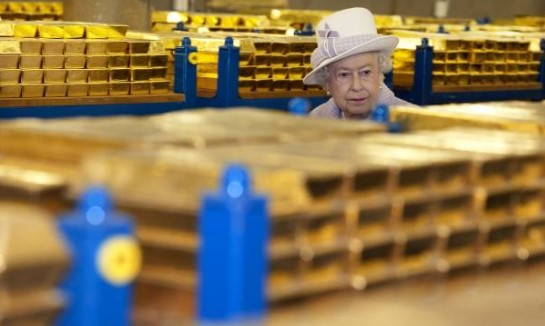
Think about how telling that is. The people creating the currency don’t fully trust the currency they’re creating.
So, they’re quietly stockpiling something that can’t be printed.
That tells you everything. Meanwhile, sophisticated investors are gravitating toward real productive assets, businesses that generate real cash flow, no matter what happens to prices, hard assets like gold and certain commodities, and ownership stakes in companies that provide things people need regardless of the economic weather.
What they’re avoiding is just as telling as what they’re buying.
They’re staying away from the most crowded, most talked about trades, the ones where everyone already owns the same handful of popular stocks.
Because when everyone already owns something, there’s nobody left to buy.
When the mood turns and everyone tries to sell at once, that’s exactly the setup we have today with a small handful of massive companies making up an enormous share of the stock market that most people’s retirement accounts are quietly riding on without even realizing how concentrated it’s become.

There’s another piece of this story I think deserves real attention because it explains where a huge amount of the newly created wealth is actually flowing and it’s not where most people assume.

This year it was reported that a small handful of private companies, the kind of companies you and I mostly can’t buy shares in on the open market, are now worth more combined than every single company that went public in the United States over the last 45 years put together. Sit with that for a second.
Decades of public companies, all the household names you’ve owned in your retirement account, and a tiny group of private companies now outweighs all of it combined.
That tells you something important about where the real growth in this cycle is happening.
And it’s happening largely behind a door that ordinary investors don’t have access to.
Meanwhile, the money that ordinary households can access.
People think owning a broad index fund automatically means they’re diversified.
And historically that was mostly true, but right now it’s much less true than it used to be because so much of that indexes movement is really just tracking the fortunes of a handful of giant technology companies.
I still believe in owning index funds as part of a plan.
I want to be clear about that.
But you need to actually understand what you own rather than assume the label diversified means what it used to mean.

I also want to spend a moment on gold specifically because I mentioned central banks buying it and I don’t want that point to slide past you too quickly.
Throughout thousands of years of human history across completely different
civilizations that never even had contact with each other.
Gold kept showing up again and again as the thing people trusted once paper money lost credibility.
That’s not a coincidence and it’s not superstition.
It’s because gold can’t be created out of thin air the way currency can.
A government can order a printing press to run faster, but it cannot order more gold into existence.
That single difference is why every time a major currency has gone through a serious devaluation throughout history, gold has tended to hold or increase its purchasing power in real terms.
Even while the currency measuring it collapsed around it in the 1970s when the United States went through a brutal stretch of high inflation after leaving the gold standard the price of gold rose roughly 8fold over the course of that decade.
I’m not telling you that guarantees anything close to that distance because every cycle is different and I genuinely don’t have a crystal ball.
But I am telling you that the people running the central banks, the very people creating the new currency are themselves quietly building up gold reserves at a pace we haven’t seen in decades.

When the people who control the printing press are hedging against their own currency, that’s about as clear a signal as you’re ever going to get in this business.
I want to walk you through what a genuinely balanced approach looks like because I am not here to tell you to panic sell everything and hide cash under a mattress.
That would actually be one of the worst things you could do because cash sitting still is precisely the asset guaranteed to lose value in this environment.
The goal isn’t to predict the future perfectly because nobody can do that, including me.
The goal is to build something that can hold up reasonably well across a wide range of outcomes because you genuinely don’t know which specific outcome you’ll get.
That means owning a mix of things that behave differently from each other when conditions change.
Stocks for growth over the long run, but not concentrated in just a handful of popular names.
Bonds, but understanding that in a printing environment, long-term bonds can quietly lose real value even while looking safe on paper.
Hard assets like gold, which have protected purchasing power through every single currency, devaluation in recorded history, going back thousands of years, not just decades, and real productive businesses and real estate that generate income regardless of what a currency happens to be worth on any given day.
This isn’t about being clever or trying to outsmart the market. It’s about being humble enough to admit you can’t predict exactly how this plays out while still being prepared for the range of ways it realistically could.
I also want to address the part of this that honestly upsets me because it’s genuinely unfair.
And I think it’s important to say that plainly rather than pretend this is all just neutral economics.
When this kind of reset happens, it does not hit everyone equally.
The people who own hard assets, real businesses, and diversified holdings tend to come through it in reasonably good shape, sometimes even better than before.
But the people who simply hold cash, who keep their savings in a basic account,
who trust that the system will treat them fairly by default, tend to be the
ones who quietly lose the most because they never got the memo about what was
actually happening beneath the surface.
This has played out again and again throughout history. And every single time the people who understood the mechanics early were able to protect themselves, while the people who didn’t were left dealing with the consequences years later, wondering what happened to their savings.
That gap in understanding is genuinely one of the biggest drivers of inequality that nobody talks about
honestly enough.
And it’s a huge part of why I care so much about explaining this in plain language instead of hiding it behind complicated jargon that keeps ordinary people locked out of understanding their own money.
The people at the very top of the system, the ones close to the newly created money and the private markets I mentioned earlier, tend to come out of these periods wealthier than they went in simply because they’re positioned closest to where the new money actually lands first.
The people furthest from that, the ones working a regular job, saving diligently, doing everything they were taught was responsible, often end up carrying the cost without ever being told clearly why.
I don’t say this to make you angry, although I understand if it does.
I say it because understanding this dynamic is the first step to actually protecting yourself from it rather than simply hoping the system treats you fairly by default which historically speaking it usually doesn’t. Let me give you one more historical example because I think it makes this whole idea click for people
in a way that abstract numbers don’t.
Go back to Germany in the early 1920s. The government there had run up enormous
debts largely from the first world war and it faced the exact same three choices I described earlier.
Raise taxes and cut spending. default outright or print money. It chose to print slowly at first and then faster and then faster still until prices were doubling every few days and people were reportedly pushing wheelbarrows full of cash just to buy a loaf of bread.
That’s the extreme end of the spectrum. And I want to be very clear that I am not telling you we’re heading toward wheelbarrows of cash.
Most currency debasements in history don’t go anywhere near that far.
And the United States has structural advantages like being the world’s reserve currency that make an extreme outcome far less likely here than it was in postwar Germany.
But the mechanism, the actual machine is identical every time.
Debt gets too large, the government prints to cover it and the people holding that currency in cash quietly lose purchasing power while the people holding real assets are shielded from most of the damage.
The scale is different every time. The mechanism never is. Let’s also talk about timing cuz I know that’s what’s really on your mind right now.
Nobody including me can tell you the exact month or the exact day.
This accelerates further. What I can tell you is that these things move like a slow building wave rather than a sudden cliff until they don’t.
And the moment they don’t is exactly when it’s too late to prepare.
Calmly the signs I’ve walked you through.
A government quietly drawing down its buffers. A central bank increasingly buying its own debt, wealth concentrating harder into fewer hands.
These are not brand new signs. They’re the same signs that show up near the end of every long-term debt cycle throughout history.
Whether that was the 1930s, the 1970s, or examples in other countries over the last few decades, the pattern doesn’t repeat because history has faded to repeat itself in some mystical way.
It repeats because human nature and the incentives facing politicians and central bankers don’t really change from decade to decade.
Given the same pressures, people in power tend to make the same choices over and over across completely different countries and completely different eras.
That’s precisely why understanding the pattern once means you can recognize it every single time it shows up again for the rest of your life.
So, here’s my honest challenge to you, and I mean this sincerely.
Don’t take what I’ve said today and simply copy it blindly.
And don’t take what anyone else says online, and copy that blindly either.
Because your situation, your age, your obligations, your risk tolerance, they’re all different from mine and different from everyone else’s.
What I want you to take from this video isn’t a specific list of things to go by tomorrow morning.
Uh talk to people you trust about it. Read more than just one source.
And most importantly, don’t let this be a video you watch once, nod along to, and then forget by tomorrow morning.

Because that is genuinely how most people experience these moments right up until it’s too late to act calmly instead of in a panic.
Share this with someone in your life who needs to hear it.
Leave a comment telling me what part of this surprised you the most. And if this helped you see something you hadn’t seen before, subscribe so you’re here for the next piece of this story because I promise you there will be a next piece and I intend to keep explaining it in plain language exactly like I just did today.

Thank you for spending this time with me. Uh, take care of yourselves and
take care of your money?