The Last Tartarian Died in 1952 — What They Told Grandson Before Taking Secrets to Grave
History Perspective
History Perspective
16,6K abonnees
202.114 weergaven 20 jan 2026
In the quiet of a 1952 sickroom, the final link to a forgotten empire allegedly drew their last breath—but not before passing a heavy burden to the next generation. We reconstruct the haunting deathbed confession of a grandfather who claimed to be a survivor of the Great Reset. This narrative traces the oral history of a world before the “official” timeline began, revealing where family heirlooms meet suppressed technology. What final warning was whispered about the architects of the modern world? Join us as we uncover the secret legacy that one man refused to let die.
Transcript
https://www.youtube.com/watch?v=3liGnI8HLBs
You’re sitting across from someone very old. Their hands shake when they lift the teacup. The afternoon light makes dust visible in the air between you.
They’re telling you about their childhood, about a city that doesn’t exist anymore, about buildings that were torn down before you were born.
And then they stop. They look at you and they say, “There’s something I need to tell you before I die. Something about what things really were, about what we really had. Now forget everything you think you know about history and cleanly.
A about the last of ancient things dying centuries ago, buried in textbooks, safe in the past.
Because in 1952, in a small apartment in Almsk, an old man told his grandson the truth, and then he died, and the truth died with him.
Except the grandson wrote it down. This is what he wrote. I found the notebook in 2019, an estate sale in Montreal.
The seller’s grandmother had immigrated from Russia in 1956, 4 years after the man in the story died.
The notebook was in a box of documents, Soviet travel papers, photographs of people whose names no one remembered anymore, letters in languages the family couldn’t read.
The estate sale was in a basement apartment in my end. November rain drummed against the windows. The seller was a woman in her 60s who spoke French with an accent that had been worn down by decades in Montreal, but still carried something else underneath.
Something Eastern European, something old. She didn’t want to talk about the box.
She said her grandmother never talked about Russia, never talked about what she left behind, just worked, raised children, died quietly in 1989, without ever returning.
The box had been in the grandmother’s closet for 33 years. The granddaughter had never opened it until preparing for the estate sale.
The notebook was small, brown leather, cracked at the spine like dried earth.
The leather was soft, worn by hands, warmed by pockets. Someone had carried this, had held it close. Inside the handwriting was Russian Cyrillic, dated entries spanning 1951 to 1953.
The first 20 pages were ordinary grocery lists, weather observations, complaints about neighbors, reminders about work shifts. The handwriting was neat, controlled, the observations mundane.
But 30 pages in, everything changed. The handwriting became urgent. Dense paragraphs with no breaks. Words crowded against each other as if the writer was
racing against something, against time, maybe against forgetting, against death.
The ink changed too, became darker, as if pressed harder into the paper, as if each word was being carved rather than written.
The first entry in this new style was dated November 12th, 1952.
Grandfather is dying. The doctors say maybe two days, maybe three. He can barely speak, but today he called me close.
He grabbed my hand, his grip still strong despite everything. And he said, “Get paper. Get a pen. I have to tell you something before I go. Something true, something they erased.” The next entry was November 13th, 1952.
I brought the notebook. Grandfather saw it and nodded. He told me to write everything down word for word.
He said, “They will say none of this was real. They will say we imagined it. But you will know what we lost. Someone has to know.
Someone has to remember when I’m gone. Then came November 14th, 1952. The
longest entry, 15 pages written in a single day. The handwriting getting shakier toward the end. The words sometimes crossing over themselves, but never stopping.
Grandfather died this morning. But before he went, he told me things.
He told me everything. I wrote as fast as I could. My hand aches, but I
can’t stop.
If I stop, I might forget. And he made me promise not to forget. I paid $40 Canadian for the notebook.
The seller seemed relieved to be rid of it. I had it translated. Then I spent three years trying to verify what it claimed.
What I found was impossible, but it was also true. The grandfather’s name was Miky Sakalof, born April 1869 in Kazanne. Died November 14th, 1950. Two ins 83 years old. I found his death certificate in digitized Soviet records.
Cause of death, cardiac failure. No surviving family listed except grandson
Victor age 19.
No other details, just a name, a date, a cause, and then nothing.
The bureaucratic minimum.
The official eraser that comes with death in a system that doesn’t care about individual lives. But Victor’s notebook gave Miky a different kind of survival. Victor wrote that his grandfather had been sharp until the very end. Could recite Pushkin from memory, could do complex calculations in his head without paper,
could describe buildings demolished 50 years earlier with perfect architectural precision, could remember the exact placement of windows, the precise angles of roof lines, the specific colors of stones.
Victor wrote that Mikyle had worked as a postal clerk for 40 years. a quiet job, a safe job, the kind of job that let you disappear into Soviet bureaucracy and never attract attention, never be noticed, never be questioned.
But according to Victor’s notes, Mikael waited until 2 days before his death to speak, as if he’d been carrying something too heavy, too dangerous.
And finally, the weight of silence became heavier than the weight of truth. What male told Victor was this. He was Tartarian, not Russian, not Soviet, not Tatar, Tartarian.
He said the word as if it still meant something. As if there was still a living nation behind it, not just a ghost on antique maps, not just a western cartographic mistake, not just a confusion of medieval geography.
He said, “I am the last one who remembers what it was, the last one who lived in the real buildings, who knew what they were for, who saw them working before they were changed.
When I die, no one will remember. They will only know the lies.” Victor the whole conversation.
It took 7 hours. Apparently, Miky’s voice was weak, but he wouldn’t stop. Wouldn’t let Victor leave to get help, to call a doctor, to bring medicine. He said, “Let me finish. This is more important than another day. Another day won’t change anything.
But this, if you don’t write this down, it disappears forever.” He described a kazan that doesn’t exist in any official record.
A city that sang.
Mikuel said he grew up in a city of red brick and white stone where every major building had copper domes that sang in the wind. He used that exact word, sang.
Not rang, not chimed, not resonated, sang. Musical notes, harmonies, chords
that changed with the weather. He said if you stood in the right spot in the market square on a windy day, you could hear harmonies, multiple tones layering over each other, rising and falling with the breeze like an invisible choir.
He said the sound made you feel calm, made anxiety dissolve, made anger seem pointless. He said the buildings were not just buildings, they were instruments.
The entire city was an instrument. Victor wrote, “Grandfather described the Kazan Kremlin as it was in his childhood, not the museum it became, not the tourist site.”
He said the towers had copper caps. He called them singing caps that were removed in 1897 and never replaced. He said the caps were shaped, specifically angles calculated, metal thickness exact, to resonate at certain frequencies when wind passed over them.
He said on feast days when all the bells rang and the wind was right, you could feel it in your chest. A vibration that made you calm, made you well, made you remember you were part of something larger.
I checked this against official architectural records.
The Kazan Kremlin underwent major restoration work.
In 1895 1897, the official reports available through the Russian state archive of ancient acts.
Note removal and replacement of deteriorated copper elements from towers.
The reports list the work completed. August 1897, copper elements removed, replaced with slate roofing, structural integrity restored.
They don’t explain why the copper elements were deteriorated. Copper doesn’t deteriorate like that. It patas, turns green, but it lasts centuries. The reports don’t describe what shape the copper elements had. Don’t specify the angles, the thickness, the geometry.
They just note removed, replaced, more completed. The copper caps are gone.
The towers are silent now.
Miky told Victor that his father had been a metal worker, specifically a copper smith who specialized in architectural elements, had helped maintain the singing caps, had access to the technical drawings that showed the exact angles, the precise thickness of copper required, the mathematical relationships between different tower heights that created the harmonic intervals.
He said his father brought the drawings home once in 1889 when Mikuel was 20 years old. The drawings were on vellum, hand drawn with ink that had faded to brown. The calculations covered the margins, numbers, ratios, geometric diagrams that looked like they belonged in an astronomy text, not an architectural plan. His father said the drawings were very old, older than Russia.
From the time before, from when people knew things we’ve forgotten. Miky asked what that meant, “The time before.”
His father wouldn’t explain, just said, “Before it all changed. Before we forgot what the buildings were for.” In 1918, Mikyle’s father was arrested during the Red Terror. His workshop was searched. The technical drawings, all of them, decades of work, were confiscated.
He disappeared into a prison in Siaaska and never came back. No trial, no explanation, just gone.
Miky was 49 years old when this happened. Old enough to remember every detail. Old enough to know exactly what was being erased.
Old enough to understand that asking questions would mean joining his father in prison. So, he stayed quiet. got a job as a postal clerk, kept his head down, survived for 34 more years.
He stayed quiet until the day before he died. I found seven other accounts, different cities, different years, same pattern. St. Petersburg, 1934.
A woman named Anastasia Vulov wrote to her sister in Paris. The letter survived because the sister kept everything, a habit of immigrants, saving every scrap of the homeland.
The letter is now in a private collection in Lyon. I found a reference to it in a catalog of Russian agra papers. I contacted the collector. He sent me a photograph. The letter was dated March 15th, 1934. Written in careful script on thin paper.
Anastasia wrote, “They are changing the buildings again. The old stone circles around the foundations, the ones grandmother called boundary stones. They’re digging them up and hauling them away. The workers don’t know what they are.
They think they’re just old foundation stones, worthless. But grandmother told me those stones were placed intentionally.
She said they regulated something, though she could never explain what exactly. Just that without them, the city breathes wrong.
I don’t know what she meant, but I feel it now. The air feels different since they started removing them. Heavier, less alive. The letter ends abruptly.
Anastasia Vulkoff disappears from all records after April 1934. No death certificate in Lenenrad records. No deportation record. no prison record, at least none that have been digitized, just gone.
Her sister in Paris wrote back seven times over the next 2 years. The letters were returned marked a dressy unknown.
Tobolsk 1929, a school teacher named Dmitri Petrov, was arrested for antis-siet propaganda and mystical thinking. His crime, according to the NKVD file I found in the memorial society’s digitized archive, was telling his students that the old city had purposes we no longer understand.
The file quotes his classroom lecture from March 1920 n our ancestors knew things we’ve forgotten.
Look at the old buildings, the proportions, the placements, the relationships between structures. These were not random. These were not merely aesthetic. The buildings remember even if we don’t.
They were built to do something, to serve a function. We’ve lost the language to describe. Three students reported him. He was arrested the next day. Sentenced to 10 years hard labor. Destination Solavki, the prison camp on the White Sea. He died in transit. July 1929, age 46 because of death listed as dents.
The file includes a note from the interrogator. Subject showed signs of delusional thinking regarding buildings and historical knowledge. Recommended psychological evaluation. Evaluation not completed due to subject’s death in transit.
Samara 1945, a civil engineer named Ivan Krosov wrote a report about postwar reconstruction.
The report was supposed to be purely technical, assessing which buildings could be salvaged, which needed demolition, which required repair.
But in section 7, page 23, Krosov wrote, “Several buildings scheduled for demolition show unusual foundation structures inconsistent with known Russian architectural practices of any period.
The foundations extend to depths of 812 m far deeper than necessary for structural support.
The foundation stones are arranged in circular patterns rather than linear footings. Some stones show evidence of metallic inclusions, copper or bronze elements embedded within the limestone.
Purpose unknown. Recommend preservation for further study before demolition proceeds. His recommendation was denied.
The demolition order came through in January 1946. The buildings were torn down. In March 1946, Ivan Krosov wrote another report.
In September 1946, I found both reports in the Samra Oblast archive.
The second report made no mention of unusual foundations, made no mention of metallic inclusions or circular patterns.
The writing style changed entirely, became purely technical, purely descriptive, with no analytical observations or recommendations for study as if someone had edited his curiosity out or warned him that curiosity was dangerous.
Yikatarinberg, 1923. An Orthodox priest named Father Gregori kept a diary. The diary survived because it was hidden in a church basement discovered during renovations in 1997, donated to the local historical society.
Entry from June 1923. The Bolsheviks ordered the removal of the church bells yesterday. All of them. Not just from our church, from every church in the city.
They say it’s to melt them down for metal. But the connoisseur, who oversaw the work, seemed more interested in the bells themselves than their metal value.
He measured them, wrote down the dimensions, asked the bell ringers which tones they produced.
Why would he need to know the tones if he’s just melting them down?
Entry from July 1923. Old Marfa came to confession today. She’s 87 now, barely leaves her house. But she came to tell me something. She said her grandfather was a bell founder in the old days before the Soviets, before the Empire even.
She said the bells were tuned not just to sound pleasant, but tuned to specific frequencies that her grandfather called the healing tones. She said when all the bells in the city rang together, the sickness
left it. She said epidemics would come to other towns but spare Yakatarinberg. She said this was known. This was why her grandfather’s work was considered sacred. Not just religious, sacred in an older sense.
Necessary entry from August 1923. They took Marfa today. I don’t know why. She’s an old woman who speaks to almost no one. But two men came to her house and took her away. Her neighbor said they asked if she had any papers from her grandfather. Any drawings or writings about Belle’s? She said no. They took her anyway.
No further entries mention Marfa.
Father Gregori himself disappears from records in 1924. Four people, four cities, all saying the same thing. The old buildings were something else, were more than they seemed, had purposes we forgotten, and asking questions about them was dangerous, fatal, usually.
Miky told Victor about the language. This part of the notebook runs for six pages. Victor’s handwriting becomes even more cramped here, as if he was trying to fit as much as possible onto the page, as if he knew he was running out of time.
Mikail said there was a language that some of the old people still spoke when he was a child in the 1870s and 1880s.
Not Russian, not Tatar, not any of the minority languages of the vulgar region. Something else, he said it sounded superficially like Russian used similar sounds, similar rhythms, but the grammar was different.
The vowels were longer, more varied, and there were words for things that didn’t exist in Russian.
Concepts that required entire sentences in Russian, but had single words in this older language.
He gave Victor examples. Victor wrote them down phonetically, noting that he was probably misspelling them, that he didn’t know if he was capturing the sounds correctly.
Cross Nota, not just the color red, not just redness, but the frequency of red, used specifically to describe certain bricks.
MueL said his grandmother would touch a brick and say itto and his father would nod and know exactly which bricks to select for a project, the red ones that resonated at the correct frequency.
Stoania not just standing or remaining upright but standing in correct relationship used to describe buildings positioned relative to each other.
Miky said the old people would look at a new building and say onto it is not in standing meaning its position relative to other buildings was wrong broke the pattern disrupted something.
Zavonost not just resonance or sound quality but specifically the quality of resonance that heals used to describe bells domes certain architectural features.
His grandmother would stand in a church and listen to the bells and say, “Zonost Sabbaya, the healing resonance is weak.”
Meaning something was wrong with the tuning. Duchaan, literally soul of stone.
But Miky explained it meant something more specific. The memory held in stone used when talking about old buildings. The stones remember what they were built for.
Even if people forget the time before, not just the past, specifically the time before something changed, before something was lost.
His grandmother used this phrase constantly.
In the Remy, we knew the Remyadu people built differently. He said his grandmother spoke this language fluently. She was born in 1809, died in 1890. One lived 82 years, spanning a time when the old world still lingered and the new world was already crushing it.
She told Miky when he was 22 and she was dying. When I am gone, no one will speak this properly anymore.
The young people mix it with Russian. They forget the old words. The words that matter. The words that name the things we need names for. She made him memorize certain phrases. Prayers, he thought at first, but she corrected him. Not prayers. Instructions for the buildings.
For when someone remembers how to use them again. He taught them to Victor on that final day. Victor wrote them down phonetically with the admission, I don’t know if I’m spelling these right. I don’t know if they mean anything anymore, but grandfather said someone should know they existed.
I had the phrases analyzed by Dr. for Elena Sokova, a linguist at McGill University who specializes in extinct Uralik and Turk languages.
She spent two weeks with the transcriptions.
Her response, these phrases are unlike any documented language I’m familiar with. They resemble vulgar Turk languages in phenology, the sound patterns, but the grammatical structure appears inverted. In Turic languages, vowel harmony flows in a specific direction within words.
These phrases violate that pattern intentionally. It seems as if someone took Turk and reversed the harmonic flow. Additionally, there are lone words from what might be old church savonic, but incorporated in ways that don’t follow known historical patterns of borrowing.
I would need more context to classify this properly. But I can say with confidence, this is not a dialect of any living or documented extinct language in the vulgural region.
It’s something else, something we don’t have a category for. The language died with the old people. Probably sometime in the 1920s when speaking anything other than Russian became ideologically dangerous. When being different became fatal when uniformity was enforced with prisons and
bullets.
The pattern Mccel described was specific mathematical exact.
He said the old cities Kazan, Samara, Tbolsk, Yikaranburgg, Omsk, Tomsk, Ufa, Perm
were built on a grid. Not the grid you could see in the streets, which were often meandering, organic, following the landscape.
A deeper grid, a hidden grid. He said, “If you mapped the major buildings, the ones with copper domes or stone foundations that went down too far or bells tuned to specific frequencies, you’d see geometric relationships, perfect geometric relationships.”
He said his father had shown in this once in 1889 using a survey map of Kazan and a straight edge. His father drew lines connecting the Kremlin Towers to the Marjani Mosque to the Epiphany Cathedral to the Gstini De’vor Trading House.
The buildings formed triangles, equilateral triangles, perfect 60° angles at each vertex. The distances between them followed specific ratios. His father had written them down.
1.68 1 2.414 numbers that meant something, though his father wouldn’t explain what. Miky had memorized the numbers because his father said they were important.
Said they were the numbers that make things work. I tried to verify this.
I gathered old maps of Kazan from 1890 before the major demolitions of the 1930s.
I found them in the Russian State Libraryies digital archive, survey maps, architectural plans, city development documents.
I marked every building Mikyle mentioned in the notebook. The Kremlin Towers, the Marjani Mosque, the Epiphany Cathedral, the Gastani Devour Trading House, the Zillentov Monastery, the Church of the Exaltation of the Cross.
I scanned the maps and imported them into CAD software, ge referenced them, corrected for distortion. Then I connected the buildings with lines. The triangles appeared. Not approximately, not sort of exactly.
I measured the angles 60.2° 59.8° 60.1° within the margin of measurement error for 19th century surveying equipment.
Equilateral triangles. I measured the distances between buildings. Then I calculated the ratios from the Kremlin to the margin mosque 1,247 m. From the Margyny mosque to Epiphany Cathedral 2017 m ratio 1.617 the golden ratio is 1 1.618 618 From Epiphany Cathedral to Gustin D’vor 1,247 m From Gstin D’vor to Church of the Exaltation 3,10 m ratio 12.413 the silver ratio is 12.414 414.
The same pattern appeared in Samara. I found pre 1,920 city plans in the Samara Oblast archive.
Marked the major buildings, connected them. Equilateral triangles, golden ratio spacing, silver ratio spacing to Balsk. Same pattern.
Yakataranberg. Before the 1930s reconstructions, same pattern. Someone designed these cities according to geometric principles. Someone placed the major buildings with mathematical precision across distances of kilometers.
And then starting in the 1890s and accelerating through the 1920s and30s, those buildings were systematically altered or destroyed.
The domes removed, the foundations dug up, the bells confiscated, the geometric relationships broken, the grid shattered.
Miky told Victor the hardest part to believe. The part that sounds like superstition, like old wives tales, like the kind of thing an old man might misremember or exaggerate.
Except he didn’t misremember. He was specific. He gave dates, numbers, observations. He said the buildings did something. Not metaphorically, not symbolically, literally, physically, mutisably.
He said they regulated. He used that exact word, regulated like a thermostat regulates temperature, like a valve regulates pressure, like a governor regulates engine speed.
He said, “In the summer, even during the worst heat, the old city center was cool, not shaded, cool. The air itself was different near the old buildings.
It moved differently, felt different on your skin. In winter, less snow fell in the city center than fell in the outskirts just 2 km away.
You could see the line where the snowfall changed right at the edge of where the old buildings stopped.
He said people were healthier in the old city center lived longer, fewer epidemics. When Kalera swept through the region in 1892, it killed hundreds in the newer districts of Kazan, but barely touched the old center.
He said this changed after 1897. After the copper domes were removed from the Kremlin towers, the summers got hotter, the air stopped moving the same way.
The winter snow fell evenly across the city, and people started getting sicker more often.
He said his mother noticed it first. She was meticulous, kept family records, wrote down births and deaths and illnesses in a ledger that she’d maintained since her own mother taught her.
Three generations of family health records. She showed the ledger to Mikyle in 1905. He was 36 years old.
She was 62. She said, “Look at the pattern. Before 1897, average lifespan in our
family and our neighbors, 68 years.
After 1897, 54 years, infant mortality before 1897, 1 in 10 children.
After 1897, 1 in4, she said they broke something when they took down those domes. They thought it was just decoration. Thought it was just metal, but it was doing something, regulating something, and now we’re paying the price.
Miky watched her die of pneumonia in 1908. She was 65. Before 1897, women
in her family routinely lived into their 80s. I can’t fully verify this claim.
Demographic records from Kazan in this period are fragmentary at best. The Russian Empire’s recording for non-nobility was inconsistent.
The Soviet period’s records are more complete, but also more suspect, altered for political purposes, gaps where inconvenient data might have been.
The data that does exist shows increased mortality rates in Kazan after 1900.
But this is usually attributed to rapid industrialization, increased population density, inadequate sanitation infrastructure.
Maybe that’s all it was. But I found something else. Something that suggests maybe it wasn’t. A German architectural journal from 1896.
Zitrift forbenzan journal of civil engineering volume 44 pages 287 312. an article titled acoustician anomaly and druidical artic acoustical anomalies of Tatar architecture.
The author was an engineer named Wilhelm Schaffer from the technical university of Dresden. He had traveled to Kazan in 1895 as part of a Russian government initiative to catalog historical architecture before modernization.
He spent 6 months there, made detailed measurements, took photographs, analyzed the acoustic properties of the Kremlin complex and several other major buildings.
His paper is 26 pages long, highly technical, full of diagrams, mathematical calculations, frequency analysis. The key passage is on page 303. The builders of these structures possessed knowledge of harmonic acoustics far in advance of current European science.
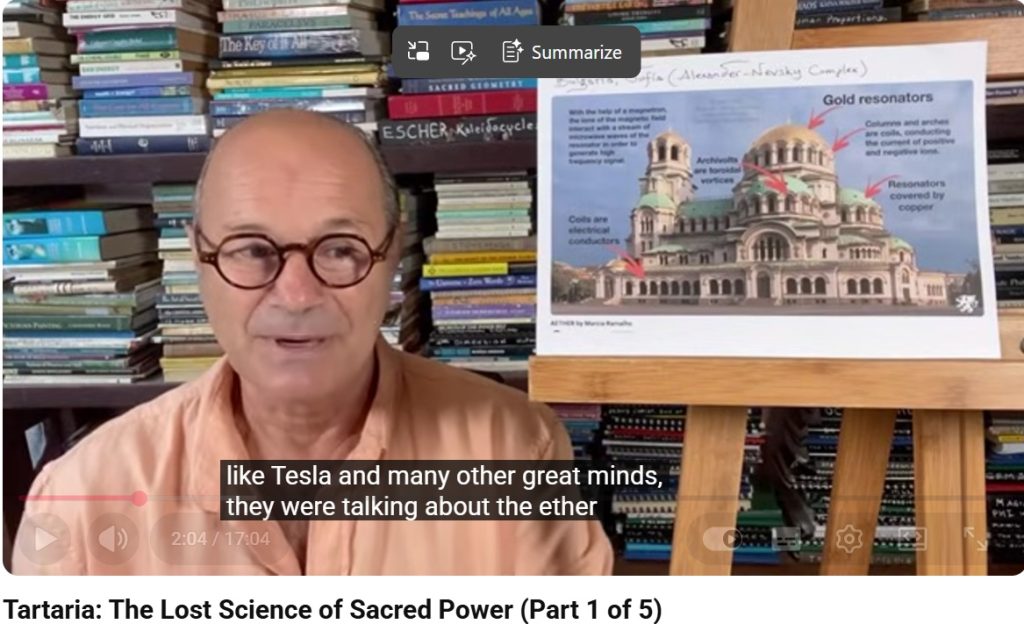
The copperdome assemblies function as Helmholtz resonators. Acoustic cavities tuned to specific atmospheric frequencies. Each dome is tuned to a different fundamental frequency, but the frequencies are related by precise harmonic ratios.
1 1.6 1 8 1 2.41 4 2 3 etc.
When wind passes over the dome structures, standing waves are established. These waves interact with each other, creating interference patterns that appear to modify local atmospheric pressure patterns over a radius of approximately 2 3 km.
The combined system appears designed to create a stable acoustic environment that dampens pressure fluctuations and maintains atmospheric equilibrium.
For what purpose I cannot determine. The local populations claim health benefits, but these claims resist quantification.
What is undeniable is the engineering sophistication, the precision of tuning, the coordination across multiple structures, the mathematical relationships embedded in the architecture. This suggests knowledge of wave mechanics and atmospheric physics that should not exist in structures this old.
The paper was published once, February 1896. It was never cited, never referenced in subsequent architectural or engineering literature.
Wilhelm Schaefer published nothing else after this paper. I searched every German technical journal from 1896 to 1920. Number other papers by Wilhelm Schaefer.
I searched university records. Number Wilhelm Schaefer, teaching at Dresden.
After 1896, I searched German census records, death records, immigration records.
Wilhelm Schaefer disappeared. A respected engineer publishes a paper describing advanced acoustic engineering in Russian architecture. Then vanishes from all records.
Either he stopped working, stopped publishing, and moved somewhere that left no paper trail or someone wanted him quiet.
Miky died before he could tell Victor everything. The notebook has a final entry from Victor dated November 16th, 1950, 22 days after grandfather died.
Two men came to the apartment. They wore civilian clothes, but they moved like soldiers. They said they were from the Ministry of Culture, showed identification cards I couldn’t read clearly. They held them up and put them away too quickly. They asked if grandfather had left any papers, any drawings, any documents about old buildings or old languages.
I said no. I thought they would leave. They didn’t leave. They searched the apartment methodically, professionally. They looked in places I would never have thought to look. Inside the linings of coats, under floorboards, inside the stuffing of the mattress.
They found grandfather’s books, old books, some of them. Books about architecture, about metallurgy, about city planning. They took them, put them in a canvas bag without explanation.
They found a box of his father’s tools, old metal working tools I’d seen but never examined closely. The tools had markings on them, symbols I couldn’t read.
Not Cyrillic, not Tatar, something else. They took the whole box. One of the men, the older one, with gray hair and a scar on his left hand. He looked at me for a long time. Then he said, “It’s better not to talk about old superstitions.
Better to remember your grandfather as a loyal Soviet citizen. Better to forget the rest.” The other man said, “There are no such things as Tartarians.
There is no lost knowledge. There is only Russia and history as approved by the ministry. Do you understand?” I said I understood they leave feet but I understood the real message say nothing write nothing remember nothing or disappear like grandfather’s father disappeared like everyone who asked questions disappeared so I will write this down I will keep it hidden but I will not speak of it not
here not in this place where curiosity is punished and truth is dangerous Victor never spoke about it again.
According to family stories passed down to his granddaughter he immigrated to Canada in 1956 during the brief window when Soviet immigration was slightly less restricted.
Brought the notebook but never showed it to anyone. Never translated it. Never explained what it contained. His granddaughter found it after he died in 2007. She didn’t read Russian. Didn’t know what it said. Didn’t know it mattered. Put it in the estate sale box. And that’s how it ended up in Montreal in a basement in my land in my hands.
In 2019, 67 years after Muel Soalov died. the last person who remembered what the buildings really were, what they really did, what was lost when they were changed.
I went to Kazan in 2021. The air already cold, the leaves already fallen. I stayed in a hotel near the Kremlin. Modern, efficient, identical to hotels in any Russian city. No character, no memory.
I walked through the Kremlin on my first morning. Tourist crowds, guided tours, information plaques explaining the history, the official history.
Catherine the Great, Ivan the Terrible, the Conquest of 1552, the architectural restorations of the 19th 20th centuries, no mention of singing domes, no mention of geometric patterns, no mention of health benefits or atmospheric regulation.
I stood where Miky said you could hear the harmonies in the market square equidistant from three towers. I stood there for an hour waiting. There was no singing, just wind over slate roofs, just the sound of tour guides explaining simplified history to tourists who wouldn’t remember it tomorrow. Just silence where harmony used to be. I found the foundations of the Gstini D’vor trading house. It was
demolished in 1933 during Stalin’s reconstruction of Kazan. The site is now a parking lot, but if you know where to look, if you examine the ground carefully, you can see the outline. The foundations are still there, buried under asphalt and 70 years of forgetting. I got permission. It took three weeks of bureaucratic navigation to examine the foundations. The city dug a small exploratory trench as part of a pipeline project. I was allowed 15 minutes of observation before they filled it back in. The stones were limestone cut in blocks that weighed by my rough calculation. About 12 tons each. No mortar, just friction fit precision. The stones cut so exactly that no binding material was needed. I measured what I could in 15 minutes. The proportions matched. Mikail’s descriptions exactly. The depth matched what the German engineer Wilhelm Schaefer had described in 1896. The official history says the Gstiny De’vore was built in 1770 by local merchants using local labor and conventional construction methods. The stones say something different. They say someone who understood weight distribution and loadbearing physics and acoustic resonance placed them. Someone who knew what they were doing. Someone who had
knowledge that shouldn’t exist in 1770. Or maybe the building wasn’t built in 1770. Maybe it was built earlier, much earlier, and someone in 1770 just claimed it, relabeled it, attributed it to themselves.
The stones don’t say when they were placed. They just sit there silent, holding weight, remembering. I talked to an old woman who sold flowers near the Kremlin gate. I bought carnations and asked if she’d heard any stories about the old buildings, about what they used to be like before renovations. She looked at me for a long time. Her eyes were blue, faded with age, but still sharp. She didn’t answer immediately. Then she said in Russian, “My grandmother said they used to sing.”
“The towers.” She said, “You could feel it in your bones. A vibration that made you calm. That made you remember you belonged somewhere.” I asked if her grandmother had told her anything else. The flower seller glanced around, checking if anyone was listening. Then she leaned closer. Grandmother said people were different then before they changed the buildings. She said people lived longer, were healthier, less angry. She said the buildings did something to the air, made it good for people. She paused then, but that was a long time ago before the war, before everything changed. Grandmother died in 1963. She said it was better not to talk about old things. Said it brought trouble. I asked if she believed it. She shrugged. Does it matter what I believe?
The towers are different now. Whatever they were, they’re not that anymore. She wouldn’t say anything more. Turned back to her flowers, arranging them in their buckets, done with questions. The questions that remain. Who were they?
The Tartarians. Not the Mongol Confederation that history remembers. Not the medieval Turk tribes. The other ones. The ones who built cities on geometric principles. Who spoke a language with words for frequencies and resonance?
Who understood something about sound and stone and human health that we’ve forgotten? Were they an empire, a civilization, a network of city states? Miky called them Tartarion.
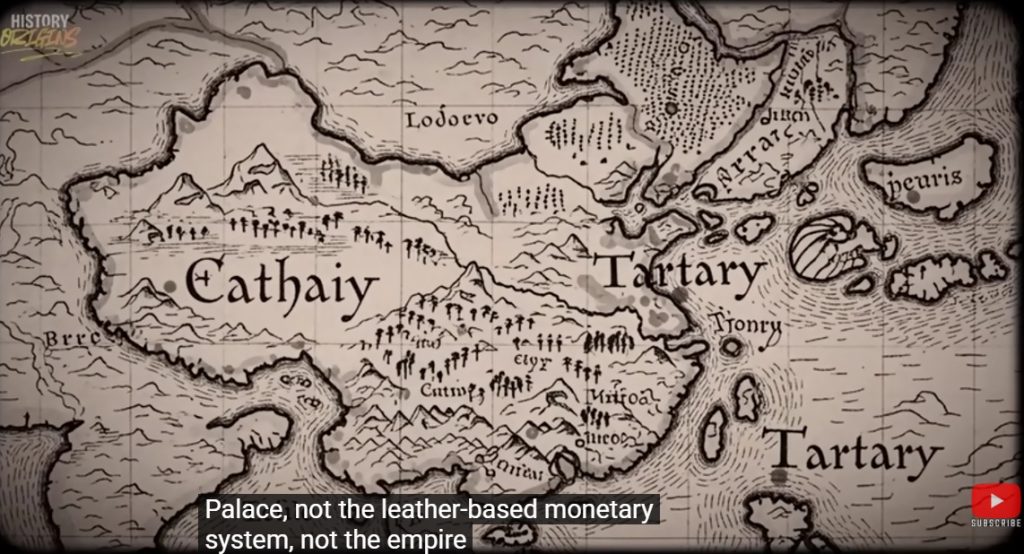
But was that their name for themselves? Or was it a name others gave them? A name that got confused, mixed up with other names until it meant nothing specific anymore. The maps from the 1600s and 1700s show Tartary covering huge areas of Central Asia and Siberia. But the maps are inconsistent. The borders change. The descriptions are vague. Western cgraphers drawing maps of places they’d never visited, filling in blanks with rumors and speculation.
Were the Tartarians those mapmakers confusion? Or were they real? And the confusion is intentional. Later obfiscation to hide what was there. What did the buildings do? Regulate. Myle said atmospheric pressure patterns, health, longevity, emotional stability through acoustic resonance, through geometric relationships that created standing waves in the atmosphere. Modern physics recognizes that sound waves can create pressure, can move air, can even levitate small objects under the right conditions.
But cityscale atmospheric modification through architecture that’s not in any textbook. Either the Tartarians understood physics were only beginning to rediscover or what they did
wasn’t physics as we understand it was something else. Something that doesn’t fit our categories. When did they end?
Gradually, Miky suggested the knowledge fading across generations. The language mixing with Russian until the old words were lost. The technical understanding dying with the craftsmen who maintained the buildings. The timeline seems to be slow decline through the 1800s, accelerated eraser in the 1920s and 30s,
final death in 1952 when male died. But when did it start? When did the decline begin? The copper domes came down in the 1890s. But were they already not being maintained properly before that? Were the skills to repair them properly already lost? Maybe the Tartarians were already mostly gone by 1800, and the 19th century was just watching the last remnants die.
Why were they erased? The systematic removal of copper domes. The demolition of foundations. The confiscation of technical drawings. The arrests of people who asked questions.
The intimidation of Victor Sokalov in 1952.
Someone wanted this forgotten.
Wanted it erased thoroughly enough that even asking questions became dangerous. Why? Ideological uniformity. The Soviet state couldn’t tolerate the idea that something older and possibly better had existed before or something more practical. The buildings did something and someone didn’t want that something to continue or fear.
Fear of knowledge they didn’t understand. Fear of power they couldn’t control. Who still knows? The men who came to Victor’s apartment in 1952 knew enough to look for drawings and tools. Knew enough to confiscate specifically the things that carried technical knowledge. Someone in the ministry knew what to look for. Which means someone maintained records, knew the history, understood what was being suppressed and why those records might still exist in some archive in some basement in Moscow or St. Canel or St. Petersburg classified, restricted, waiting for someone with the right clearance, the right persistence, the right recklessness to find them. Or maybe the records were destroyed. Maybe the knowledge died with the people who kept it. Maybe we really are starting from scratch, trying to reconstruct from fragments and whispers and old men’s deathbed confessions. What survives? The stones. The foundations buried under parking lots. The geometric relationship still visible in old maps.
The ratios still measurable if you know what you’re looking for. The stones are waiting, holding their positions, maintaining their relationships across kilome, even though the structures above them are gone or changed beyond recognition.
What were they waiting for? For someone to remember? for someone to understand for someone to rebuild what was broken. Or maybe not waiting for anything, just persisting, surviving, existing as testimony that something else was here, something we don’t understand, something we lost. I think about male Solaf often, 83 years old, dying in a small apartment ins carried memories of a city that sang, of buildings that breathed, of a civilization that knew things we’ve spent a century trying to forget. He held it as long as he could. Stayed silent as long as staying silent kept him safe. Stayed alive. Survived Stalin.
Survived the war. Survived decades of Soviet normalization that erased difference and punished memory. But at the end, silence became unbearable. Truth became more important than safety. Legacy became more important than survival. So he told his grandson, and his grandson wrote it down, and the notebook survived. And now we know. We know there was something else. Something before. Something that understood harmony and geometry and resonance in ways we’re only beginning to rediscover. Something that built cities as instruments, as machines, as living systems that served human health and well-being.
The bottoan saw. We know it was systematically erased. The buildings changed, the copper removed, the foundations dug up, the knowledge suppressed, the language forgotten, the people who remembered arrested or intimidated into silence. We know the last person who truly remembered, who lived in the real buildings, who heard them sing, who knew what they were for, died in 1952. But we also know this. The stones remain. The foundations persist. The geometric relationships are still there, buried under parking lots and modern construction and 70 years of deliberate forgetting.
The ratios are still visible if you know how to measure. The patterns are still there if you know how to look. The machine is broken, but the pieces are still there.
Maybe someone will figure out how to put them back together. Maybe someone will understand the mathematics, decode the ratios, learn what the buildings were designed to do and how they did it. Maybe someone will rebuild the singing domes. We’ll retune the city. We’ll make it breathe correctly again.
Or maybe Miky Sakalv really was the last one. The last person who knew, the last person who remembered, the last person who carried the truth, and what he knew died with him, except for 30 pages in a brown leather notebook, except for the grandson who wrote it down.
Except for the estate sale in Montreal, where history survived as an accident. Sold for 40 Canadian dollars to someone who cared enough to ask questions. Except for you now reading this, knowing that something was lost, something real, something that mattered, something that might have made us healthier, calmer, longer lived, something that understood how stone and metal and geometry could serve human flourishing. The buildings remember, even if we don’t, the stones are still in position. The ratios are still there. The machine is broken, but the blueprint persists in the foundations. Someone just has to remember how to read it. Listen, the silence itself is speaking. The absence is testimony. What was erased leaves a shape and it’s erasing. And that shape is still visible if you look carefully enough.